Little Athens in Crete – the economic heart of the island and a tourist magnet – the Lion Fountain, the Venetian fortress and the imposing city walls.
Crete’s largest city, the economic and urban centre of the entire island, does not shine for its sophisticated urban planning; here, construction takes place wherever possible.
Almost 120,000 Cretans now live in the city and its outskirts. Not many, one might think, but that is, after all, one in five of the island’s inhabitants. Heraklion is Crete’s oversized metropolis, and also the hub of the island’s entire tourism industry. Hordes of tourists swarm the city and its surroundings. Those arriving and departing, waiting for ferries and aeroplanes; holidaymakers from the large seaside hotels on the nearby beaches; and everyone else – every day, tens of thousands make their way through the not-all-that-large city centre. Nevertheless, Heraklion has a certain atmosphere – even if little remains of the city’s eventful past. The heart of the historic centre is Platia Venizelou with the Morosini Fountain. Here, you can sit back and enjoy a coffee in peace whilst taking in your new impressions. It’s just a few steps to the bustling pedestrian zone, the market street teeming with people, the spacious green Eleftherias Square and the world-famous Archaeological Museum with its unique collection of Minoan art. To get away from it all and take stock, a stroll around the fishing harbour – with its imposing Venetian fortress and long, quiet jetty – is just the thing.
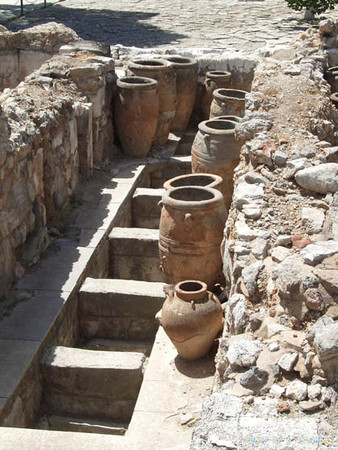
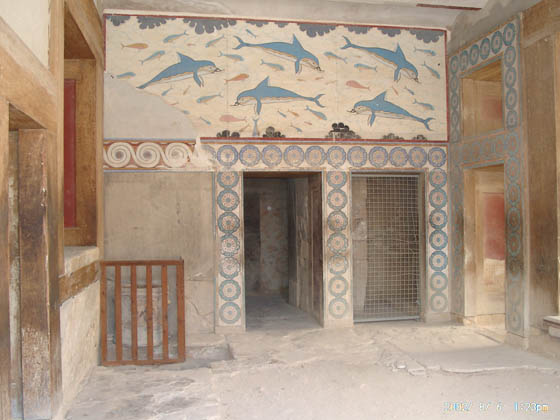
Of course, no one would miss Knossos, just a few kilometres away – a must-see visit to the magnificent ruins of the Minoan palace. Elegantly roofed ‘royal suites’, vibrantly coloured frescoes, staircases dating back millennia...
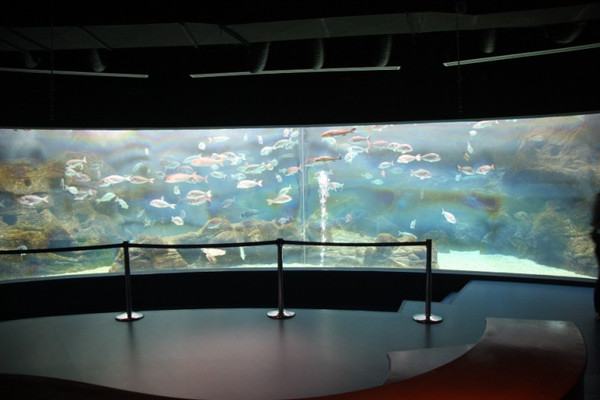
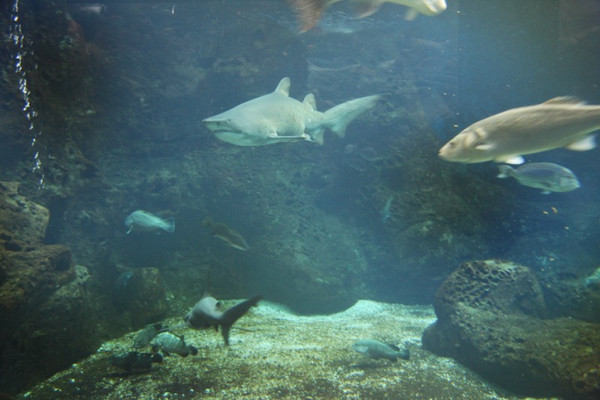
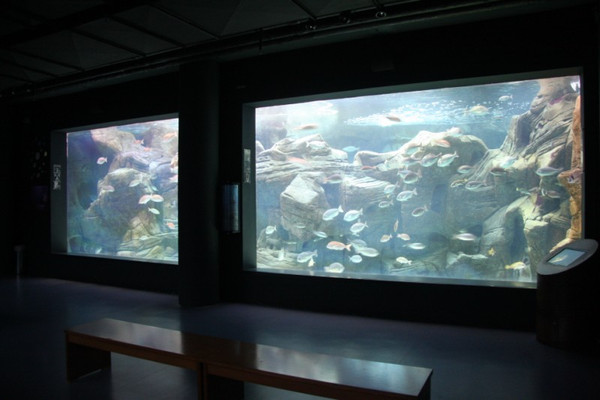
The Cretaquarium is well worth a visit.
It is situated just outside Heraklion, on the site of the former American military base at Gournes.
Telephone: +30 2810 337788
The aquarium is usually open all year round.
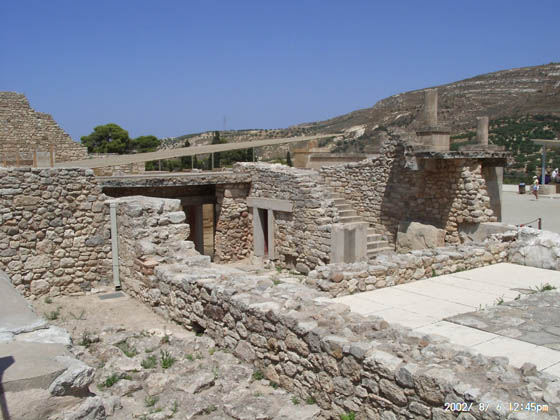
The enigmatic palace complex of the legendary Minoan kings – just a few kilometres south-east of Heraklion and one of the most significant architectural monuments of prehistory.
Over 30 years of painstaking, meticulous work at the beginning of the century saw the vast site unearthed – a wasteland of rubble with charred foundation walls, destroyed interiors and empty column stumps – yet of inestimable importance to archaeology and classical studies. What had lain buried deep within the earth of Crete was a genuine sensation and exceeded the wildest expectations of all researchers – irrefutable proof of the existence of a highly developed civilisation long before the classical antiquity of Greece. What had previously come to light only in the form of a few enigmatic artefacts was suddenly on display in abundance before the eyes of the global public – 2,000 years of Cretan and pre-European history!
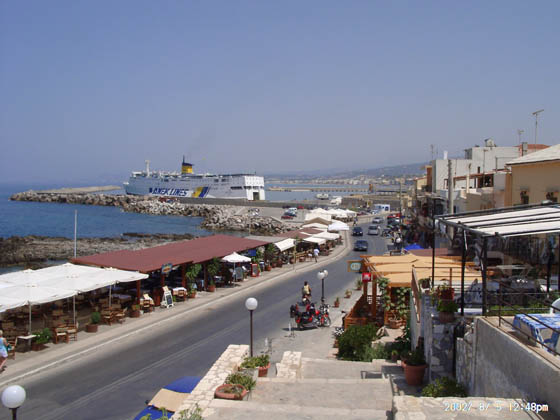
Rethymno, situated on the north coast between Heraklion and Chania, is the third-largest city in Crete and is regarded as one of the island’s most beautiful. As the home of the University of Crete, with over 3,000 students, and numerous cultural institutions, it has developed into the intellectual centre of the island.
At its heart lies the picturesque old town: narrow alleyways, Venetian palazzi, Turkish wooden bay windows, minarets and an imposing fortress are a reminder of its eventful history. Here, Italian flair and Oriental influences blend to create a unique atmosphere. Small shops, traditional tavernas and cosy cafés invite you to linger.
Just outside the city gates lies one of Crete’s longest sandy beaches, stretching for around 20 kilometres and well-equipped with water sports facilities and diving centres. Whether you’re looking for a luxurious beach hotel, an exclusive villa or a family-run guesthouse – Rethymno offers accommodation to suit every taste.
Rethymno perfectly combines history, culture and relaxation, making it a worthwhile destination for anyone wishing to experience Crete in all its diversity.


Europe’s deepest gorge – orchids, wild goats and cypress trees – flooded in spring.
A truly unforgettable experience – descending from a height of over 200 metres in the heart of the White Mountains down to the Libyan Sea! From an almost alpine high-mountain landscape with dense woodland, almost vertical rock faces and towering boulders, the deep gorge winds its way towards the liberating blue of the sea: An 18-km marathon trek to catch the last boat from Agia Roumeli – hardly anyone wants to miss out on the experience of crossing Europe’s largest gorge on foot.
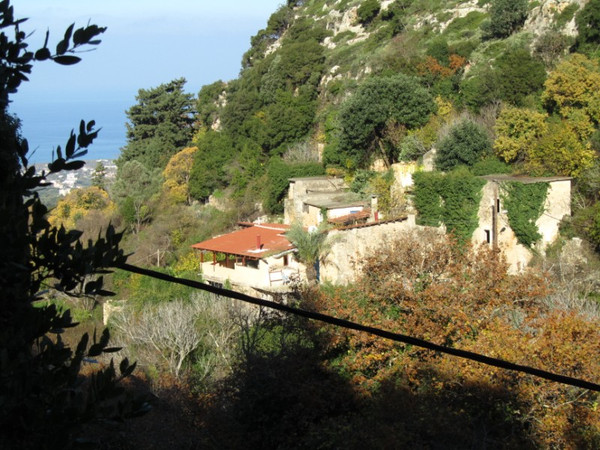
The Myli Gorge (often referred to in guidebooks as the Gorge of the Mills or the Mill Trail) is a gorge running from south to north in northern Crete. It lies south-east of Rethymno and has been home to numerous mills since the time of Venetian rule in Crete. Their remains today bear witness to pre-industrial agricultural practices. The gorge is home to numerous plants and animals, some of which are rare.
The gorge is situated about 4 kilometres south-east of Rethymno and is approximately 4 km long. Notable places include Chromonastiri and Myli. The gorge is accessible via a footpath running alongside the Mill Stream, which rises on the northern slope of Mount Angali, which stands at 811 metres. There is a tavern at the upper starting point.
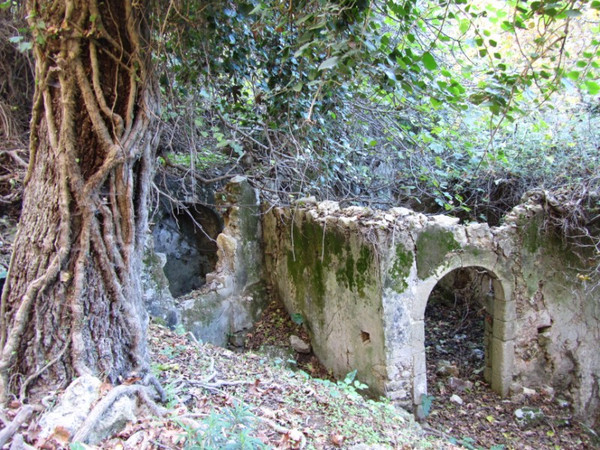
Within the gorge, the remains of numerous elaborately constructed buildings, bridges and canals for water mills can be seen; these were built in the 16th century, during the period of Venetian rule in Crete, and some remained in operation until the 1970s. These were mainly grain mills that processed the wheat grown in the surrounding area. In the 1960s, the inhabitants left the old village of Kato Myli to resettle in a more accessible location (Neo Myli). To this day, the gorge remains a little-known gem for short hikes. (approx. 1.5 hours, easy route)
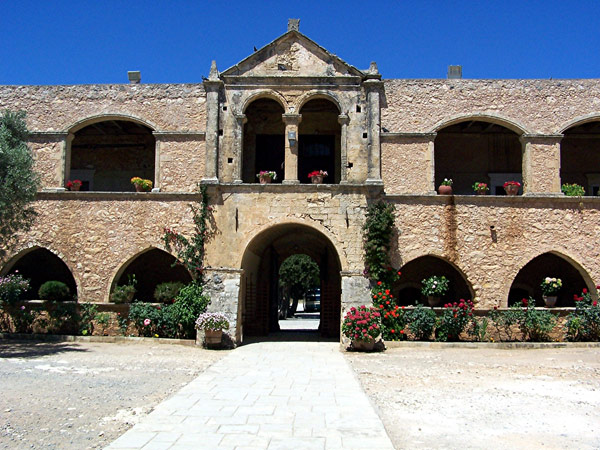
Almost a kind of sanctuary or place of pilgrimage. For the Cretans, it is the island’s most important building – a constant reminder of the prosperous era of Ottoman rule and the heroism of their ancestors.
Within the outwardly unassuming monastery, one of the most horrific tragedies of the Cretan-Greek struggle for freedom took place. On 9 November 1866, hundreds of men, women and children committed mass suicide here rather than fall into the hands of the advancing Turkish troops. Although news of this terrible event shocked people all over the world, it took more than 30 years before the island was finally freed from the Turkish yoke with the help of the great powers.
Arkadi Monastery is a symbol of the Cretans’ unwavering will to freedom. A visit is worthwhile not because of any spectacular sights, but solely because of this realisation.
The monastery is situated approximately 14 km south-west of Panormo.
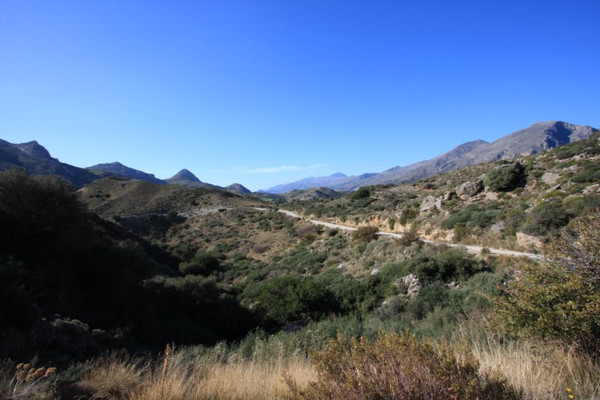
An exceptionally pretty monastery, far from any settlement, set amidst the rugged rocky landscape. All around, there is only sparse tree cover; barren scrub and karstic steep slopes stretch down towards the sea. Unfortunately, a fire a few years ago decimated the sparse vegetation.
In the 18th and 19th centuries, Preveli Monastery was one of the most important centres of Cretan resistance against the Turks.
The small village of Margarites is best known for its numerous workshops and potteries, traditional clay urns and terracotta planters, and is situated 9 km south of Panormos. In the picturesque alleyways, you’ll find a number of Byzantine churches, ornate doorways and ramparts built during the Venetian occupation.
Why not go on a day trip and visit both the Arkadi Monastery and the pottery village of Margarites?
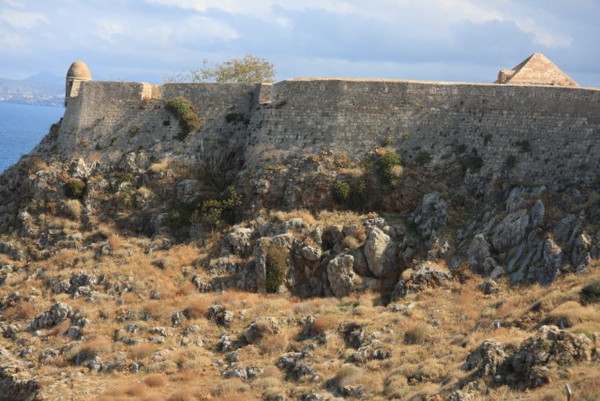
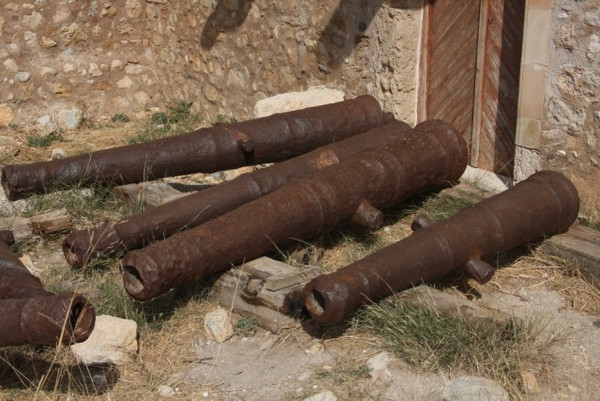
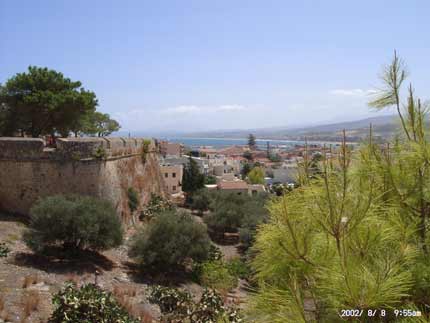
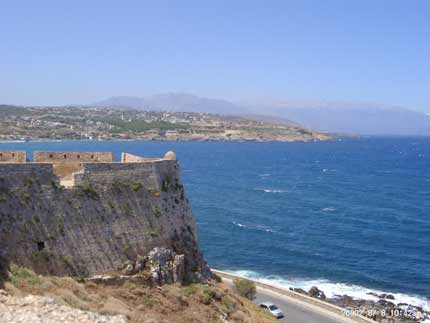
The Fortezza fortress, built by the Venetians on the rocky hill known as ‘Palaiokastro’, is the most prominent building in the town of Rethymno. According to relevant sources, which were later corroborated by archaeological excavations, this was the site of the acropolis of the ancient city of Rithymna. The foundation stone of the fortress was laid on 13 September 1573 based on plans by the Italian architect Pallavicini; however, these plans were altered during the course of the work and, due to the rocky ground and the limited space available, retained only the basic principle of the bastion layout.
The castle consists of four half-bastions on the south and east sides and three spurs on the west and north sides. Inside, mainly public buildings were erected, several of which are still preserved today.
After the town was handed over to the Turks in 1646, no major changes took place inside the castle. A mosque was built on the site of the bishop’s church dedicated to Agios Nikolaos, and the number of inhabitants increased.
By the mid-19th century, a large settlement had been established within the castle; its buildings were demolished in the 1960s of the last century as they had fallen into disrepair. At the same time, the first restoration work on the castle began; this was stepped up in the 1990s and continues to this day.
You really ought to take the time to visit the castle!
The small, picturesque village of Prines, with its romantic narrow streets, lies just about 5 km above Rethymno, the capital of the prefecture of the same name. It is about 65 km to Chania and about 80 km to Heraklion.
If you’re looking for a quiet, typically Greek holiday destination, this is the place for you. There are a few holiday homes and self-catering flats here, but no hotels. There are a few tavernas and shops, and you’ll find more in the nearest village, Atsipopoulo. During the tourist season, the shops are usually open until around 10.00 pm or 11.00 pm. Its proximity to Rethymno and its long beaches is what makes Prines so attractive.
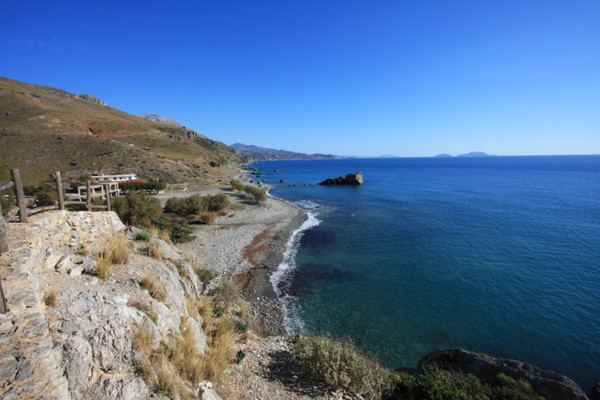
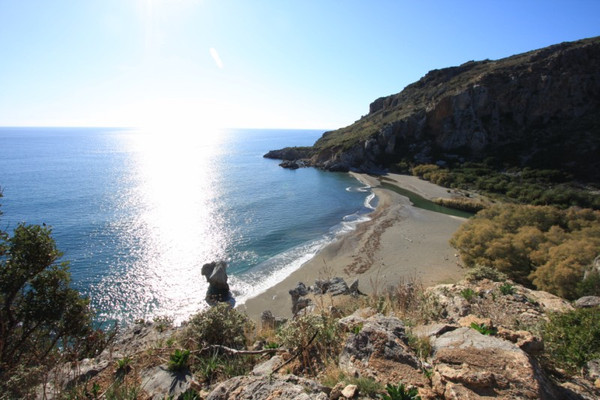
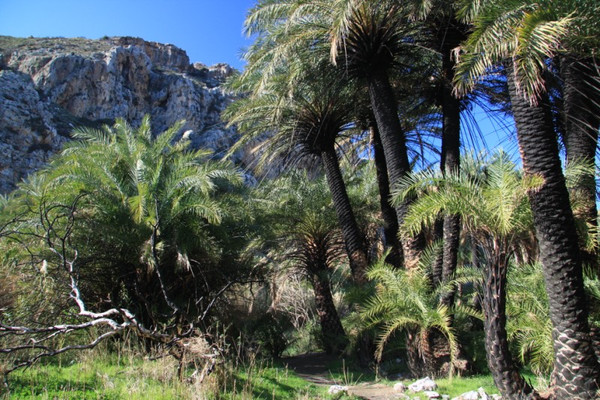
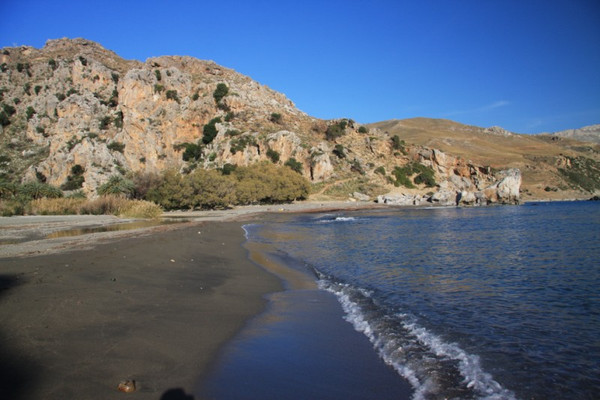
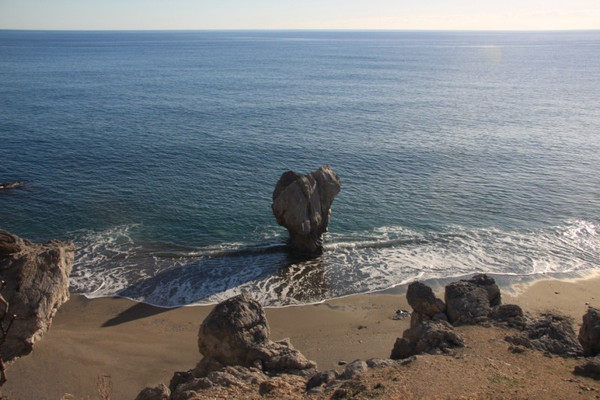
Preveli Palm Beach is a sandy beach lined with date palms on the south coast of Crete. It lies not far from the Moni Preveli monastery, from which it takes its name.
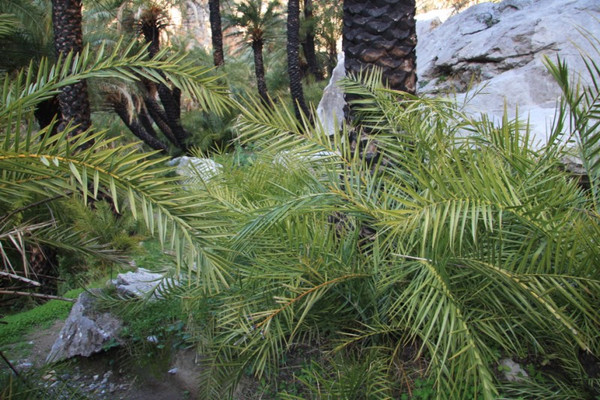
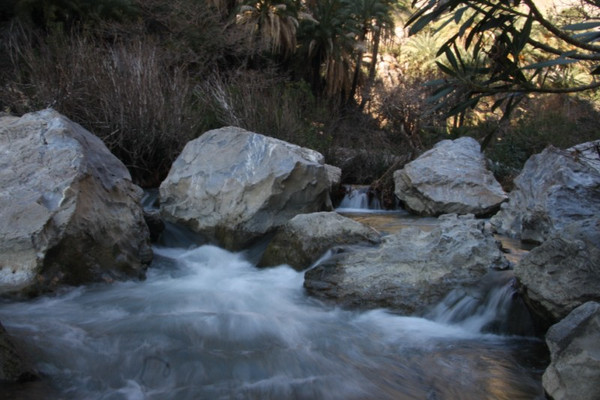
Behind the beach, the Megalopotamos – a mountain stream flowing from the Kouroupa Mountains – forms the small pond, or lake, of Preveli, which stretches into the gorge behind it. The Cretan date palm (Phoenix theophrasti) forms a natural palm grove here.
From 21 to 22 August 2010, a major forest fire broke out in the gorge behind the beach, during which large parts of the palm grove were burnt down. On 1 April 2011, the Greek Ministry of the Environment reported that the palm population had recovered almost completely and that all the palms had sprouted new shoots.
Preveli Palm Beach is situated just a few kilometres from Plakias and Lefkogeia. In Lefkogeia, Villa Zeus, Villa Helios, Villa Ifigenia and Villa Asteri are highly recommended.